Fiber-to-the-home (FTTH) is now the standard for new and upgraded internet service across British Columbia and Alberta. Whether you manage a 60-unit apartment building in Vancouver, are finishing a townhome project in Calgary, or simply want to know what the crew at your door will actually do, this guide explains how a professional fiber installation works, how long it takes, and what separates a clean, lasting install from one you will regret.
At QuantumLink Telecom, our crews have spent more than 15 years building fiber, structured cabling and wireless networks across both provinces. Here is what we have learned about doing it right.
What is FTTH, and why does it matter?
FTTH means a fiber optic cable runs all the way from the provider’s network to a termination point inside your home or suite, instead of stopping at a cabinet down the street and finishing over old copper or coax. Because the signal travels as light, fiber delivers symmetrical gigabit-class speeds, very low latency and far less interference than copper. For property owners, a fibre-ready building is also more attractive to tenants and buyers, and it avoids repeated upgrade projects as bandwidth needs grow.
The FTTH installation process, step by step
Every building is different, but a well-run fiber project in BC or Alberta generally follows the same sequence:
- Site survey and pathway design. A technician walks the building, from the telecom room to the suites, and documents existing conduit, risers, ceiling spaces and exterior walls. The goal is to find the cleanest, least disruptive route for the fiber.
- Permissions and notices. For multi-unit buildings, the property manager or strata approves the design and residents are notified of access dates. Good contractors make this easy by providing a clear scope and schedule.
- Safety planning. Before any work begins, the crew completes a Field Level Hazard Assessment (FLHA) covering ladders, working at heights, confined spaces, traffic, weather and occupied areas. See our safety standards.
- Backbone and riser work. Fiber is installed from the main telecom room through risers or conduit to each floor, then terminated in distribution hubs or terminals.
- Horizontal runs and drops. Fiber is routed along hallways, ceilings or exterior walls to each suite or home using the method chosen in the design (see below).
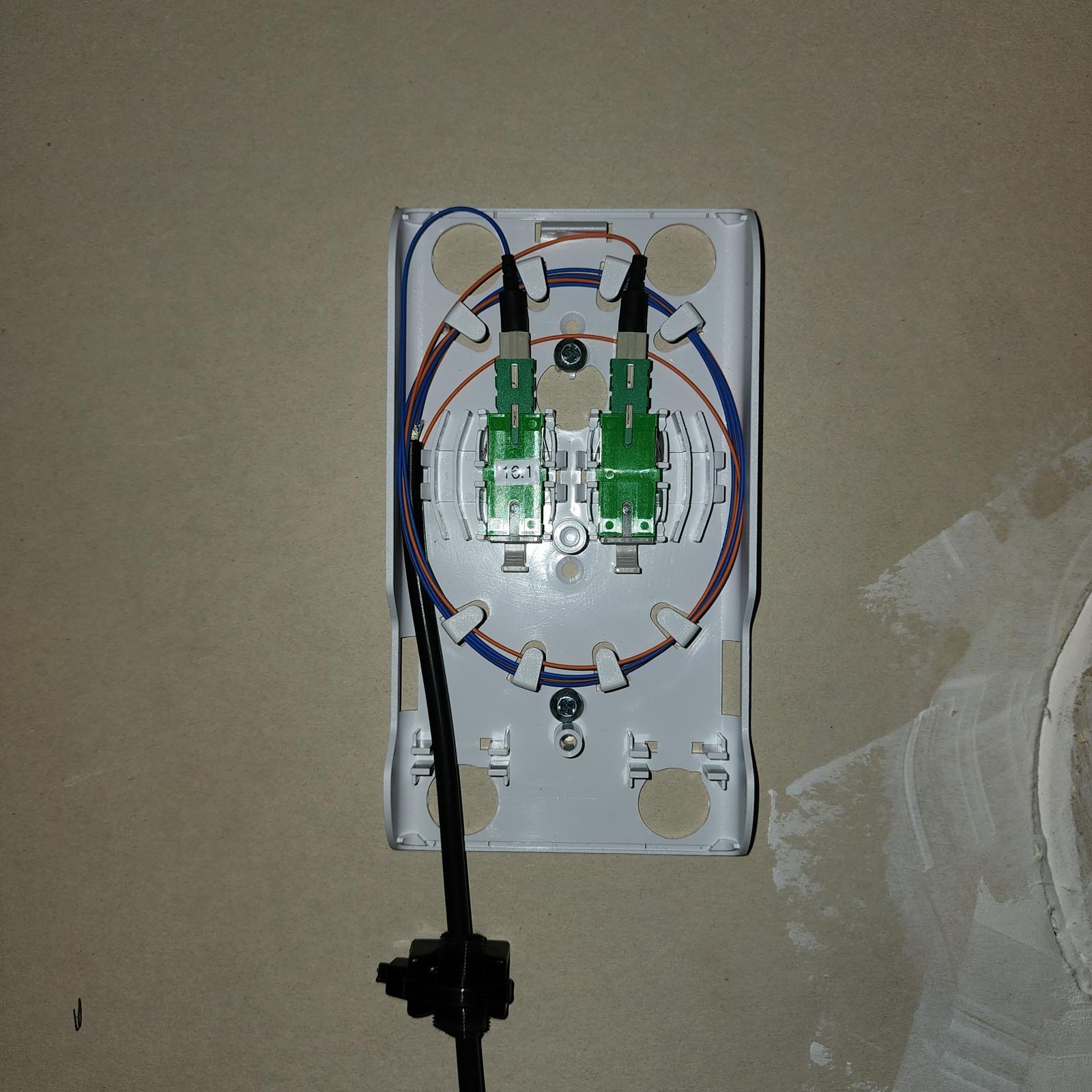
- Splicing and termination. Fibers are fusion spliced and terminated with connectors. Clean, protected splices are the single biggest factor in long-term reliability.
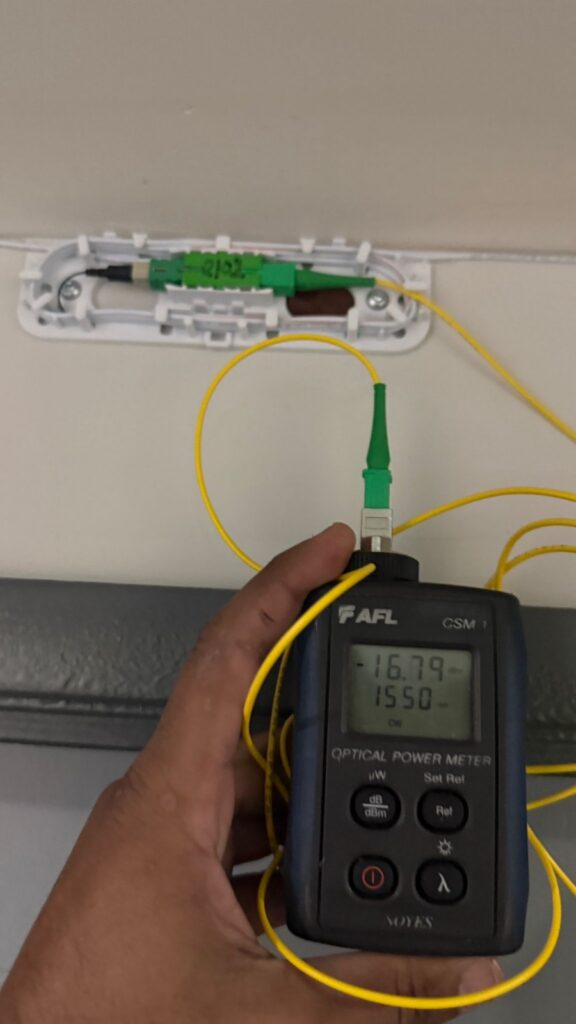
- Testing and certification. Every link is tested with an optical power meter, and OTDR testing is used where needed to locate events, splices or bends along the route. Results are recorded for the client.
- Clean-up and documentation. Pathways are tidied, penetrations are sealed and as-built records, photos and test results are handed over.
Installation methods: matching the route to the building
The biggest question in most FTTH projects is not the fiber itself but how to get it to each unit without damaging finishes or disrupting residents. These are the methods we use most often:
InvisiLight in-building fiber
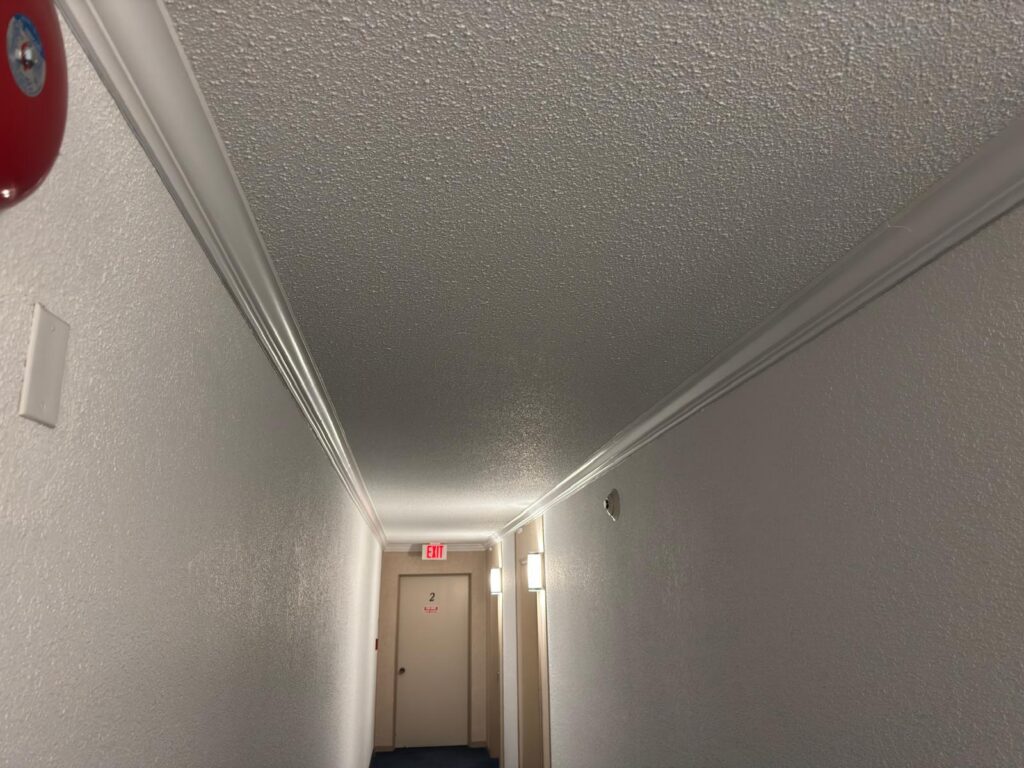
An ultra-thin fiber that is adhered along ceiling mouldings, corners and baseboards, making it nearly invisible once installed. It is ideal for finished hallways where opening walls is not an option. Learn more about InvisiLight design.
Outdoor InvisiLight and LD raceway
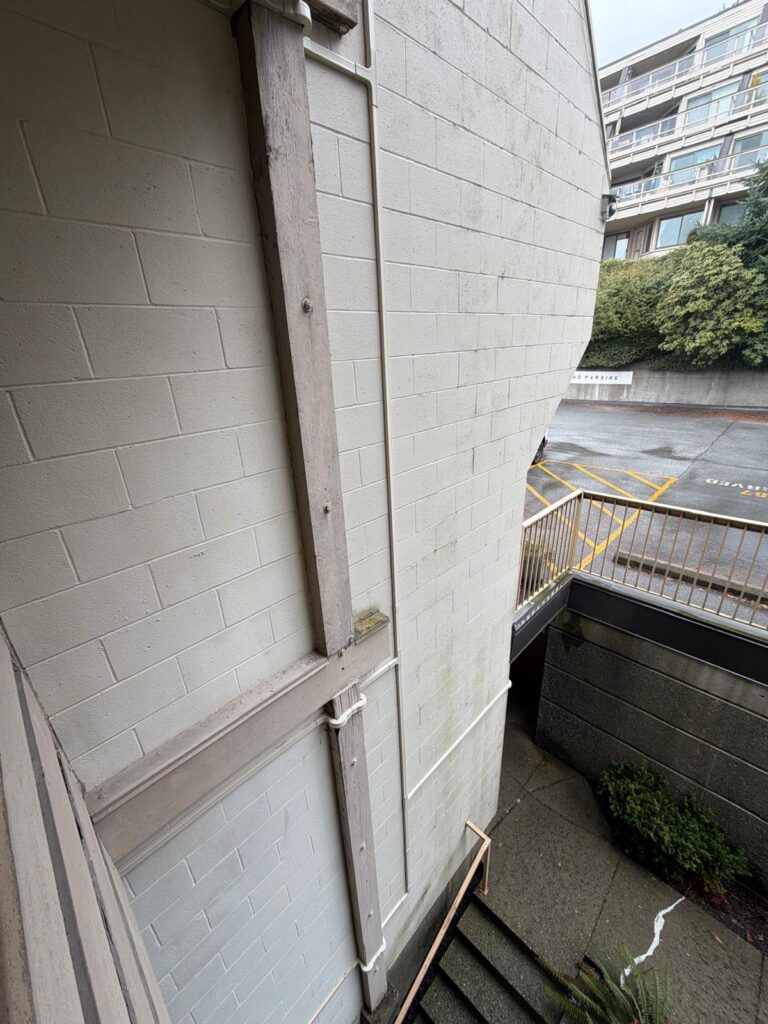
When indoor pathways are blocked, fiber can follow exterior wall edges, siding lines and soffits. Slim outdoor InvisiLight keeps the look clean, while low-profile LD raceway adds protection from weather, UV and impact.
Conduit to suite and drop ceilings
Newer buildings often have empty conduit to each unit, which is the cleanest option of all. Our conduit-to-suite and drop ceiling installs route fiber through existing pathways with minimal visible work.
Micro DPU for difficult buildings
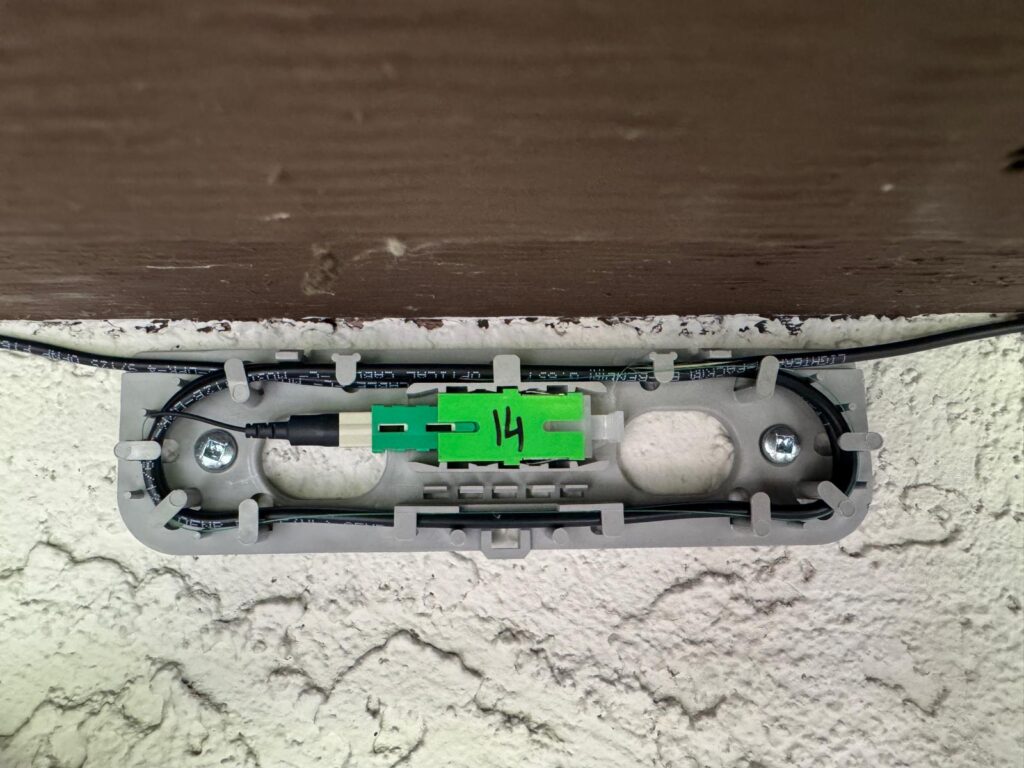
Where running new fiber to every suite is impractical, a Micro DPU brings fiber into the building and uses the existing in-suite wiring for the final connection, giving residents a major speed upgrade without major construction.
How long does a fiber installation take?
A single-family drop can often be completed in a few hours once the main line is in place. In apartments and condos, timelines depend on the number of units, the pathway method and resident access. A small low-rise might take a few days, while larger multi-building sites are usually phased over several weeks. A clear schedule and good communication with the property manager keep things moving.
What property managers, stratas and builders should ask a fiber contractor
- Do you test and document every link? Ask for power meter readings (and OTDR results where applicable) plus photos of each termination.
- What is your safety program? Look for daily FLHAs, trained crews and proper equipment for ladders, lifts and confined spaces.
- How will you protect our finishes? The contractor should explain the pathway method for each area and how penetrations will be sealed and patched.
- Who is my point of contact? One accountable contact makes scheduling, resident questions and sign-off much easier.
- Can you handle more than fiber? Many buildings also need structured cabling, Wi-Fi, CCTV or access control. One contractor for all low-voltage work saves time and coordination.
Common problems we fix (and how to avoid them)
- Over-bent fiber. Tight bends cause signal loss that may not show up until weeks later. Proper bend radius and support prevent it.
- Dirty connectors. A speck of dust on a connector end-face can cut performance. Inspecting and cleaning every connector before mating is basic, but often skipped.
- Unlabelled terminals. Without clear labels and records, future repairs take far longer. Everything we install is labelled and documented.
- Messy exterior runs. Unprotected or poorly fastened outdoor cable fails in our winters. The right raceway and fasteners matter.
Frequently asked questions
Will installers need to enter my suite?
Usually yes, for a short visit to install the outlet or terminal. Residents are notified in advance, and the visit is typically quick.
Will there be drilling or damage to walls?
Some small penetrations are normally required, but methods like InvisiLight, existing conduit and drop ceilings keep visible work to a minimum. Penetrations are sealed and finished cleanly.
Do you work in both British Columbia and Alberta?
Yes. QuantumLink Telecom supports residential, commercial and industrial fiber projects across BC and Alberta, including the Lower Mainland and the Calgary area.
Do you work as a subcontractor for larger projects?
Yes. We regularly support prime contractors and network builders with FTTH deployment, splicing, testing and in-building installs, and we deliver the photo documentation and test results those programs require.
Planning a fiber project? Talk to us
Whether you need a single building connected or a crew for a larger FTTH rollout, QuantumLink Telecom can help with design, installation, splicing and testing. Contact Jay at 778-834-3999 or email info@quantumlinktel.ca for a free consultation. You can also explore our fiber optic installation services and recent projects.